
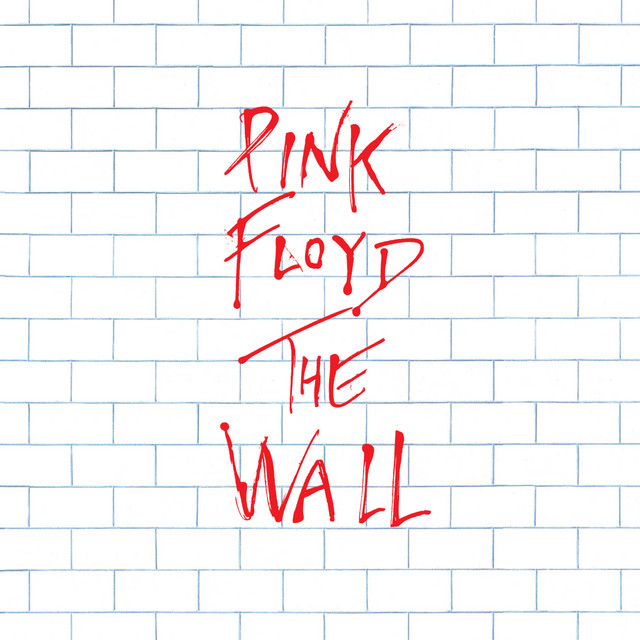
In the context of 70s prog rock, Pink Floyd stands as a monolith of the genre. They are easily the most commercially successful and influential band out of their peers (they’re one of the highest-selling music acts of all time, actually), and today I want to talk about their legendary 1979 album The Wall, which is one of their most famous works – second only to 1973’s The Dark Side of the Moon.
The Wall is most famous for three things – the second solo in Comfortably Numb, Another Brick in the Wall, Pt. 2, and the fact that it’s a concept album, perhaps the most famous ever. Thought up by Roger Waters, the band’s primary lyricist at that point, it tells the story of a rock star, named Pink. Pink is alienated from society and probably (definitely) mentally disturbed, and as the album progresses, he gradually builds a mental “wall” around himself, isolating himself more and more from other people. This culminates in him fantasizing about being a fascist dictator while he’s playing, addled by drugs, at a concert, then basically having a mental breakdown, and finally, tired and exhausted and probably hated by half the world, deciding to “tear down the wall.” But it’s not even clear if it ends there – the final words on the last song of the album are “Isn’t this where…” and the first words on the first song are “…where we came in?” You have to turn your volume way up to hear that on the first song, but it’s there.
It’s a very dark story, supposed to be somewhat of an allegory for Waters’ experiences growing up and being a superstar in Pink Floyd – and it’s all also pretty pretentious. Roger Waters had an ego, and he was infamous for being hard to work with, particularly clashing with David Gilmour in a feud that somehow manages to still continue today, forty-five years later.
But amid all the chaos and infighting going on among the members of Pink Floyd in the late 70s, all the band members managed to not kill each other and come together (more or less) to compose The Wall. And this album is perhaps Pink Floyd’s most monumental achievement, an 80-minute long sonic journey that manages to incorporate bouncy disco beats (Another Brick in the Wall, Pt. 2), pensive acoustic guitar solos (Is There Anybody Out There?), homages to 50s-era rock ‘n roll (Young Lust), deeply unsettling synth solos (Run Like Hell), terrifying outbursts from both the lyrics and Dave Gilmour’s guitar (One of My Turns), and of course Gilmour’s soul-destroying electric guitar solos (most notably on Comfortably Numb, but also on Mother, Hey You and a lot of other songs) while still staying true to the story it tries to tell through Waters’ brilliant, often frightening lyricism – with a fair amount of shots taken at both the British schooling system of the 50s and at 70s rock culture along the way. Which can be interpreted as badass, bitter, or usually both.
Backed at every step by Nick Mason’s steady and supportive drum work and Rick Wright’s masterful keyboard and piano playing, pervaded by the dark themes of Roger Waters’ overarching story and aggressive, unpolished and strikingly emotional vocals, and elevated by Dave Gilmour’s velvety voice and masterful guitar playing, The Wall roars and tilts wildly through your ears as you listen to it, ever-evolving musically but always consistent in its concept. The songs are very distinct from each other if you listen to them separately, but when you listen to the album, they come together quite beautifully.
This is why I love The Wall. I don’t know if it makes sense to explain it like this, but it’s the most coherent album I’ve ever heard. There are plenty other concept albums I’ve listened to, and there are at least a hundred full albums I’ve listened to, but this is the one where I most often find myself going back and playing whole parts of the album, instead of individual songs. It just works so well as an album, and the best part about it is that the individual songs are still really good by themselves too. Maybe it’s the transitions (it’s difficult to listen to Another Brick in the Wall, Pt. 2 without putting The Happiest Days of our Lives on before it), maybe it’s the thematic cohesion – whatever it is, it damn well works, and most of the songs themselves are good enough that they are fun and enjoyable to listen to on their own. This duality just makes The Wall more compelling.
The Wall is lauded as prog rock’s greatest epic for a reason. And I highly encourage you to discover that reason for yourself.
ALBUM INFORMATION
RELEASE DATE: November 30, 1979
GENRE: Progressive rock
RUNTIME: 1 hour 20 minutes
THE MUSICIANS: Roger Waters (lyricist, vocals, bass/acoustic/electric guitar, production); David Gilmour (vocals, electric/acoustic/bass guitar, production); Nick Mason (drums, percussion); Richard Wright (keyboard, synths, piano, organ)
BEST SONGS: Comfortably Numb, Hey You, Young Lust, Another Brick in the Wall, Pt. 2
OVERALL RATING: 9.5/10
 Pentophone
Leave a comment